
5 Major Benefits of Geothermal Greenhouses in Kansas City's Climate
Discover why geothermal greenhouses with GAHT systems are revolutionizing year-round growing in Kansas City. Learn about energy savings, growing seasons, and ROI for your investment.
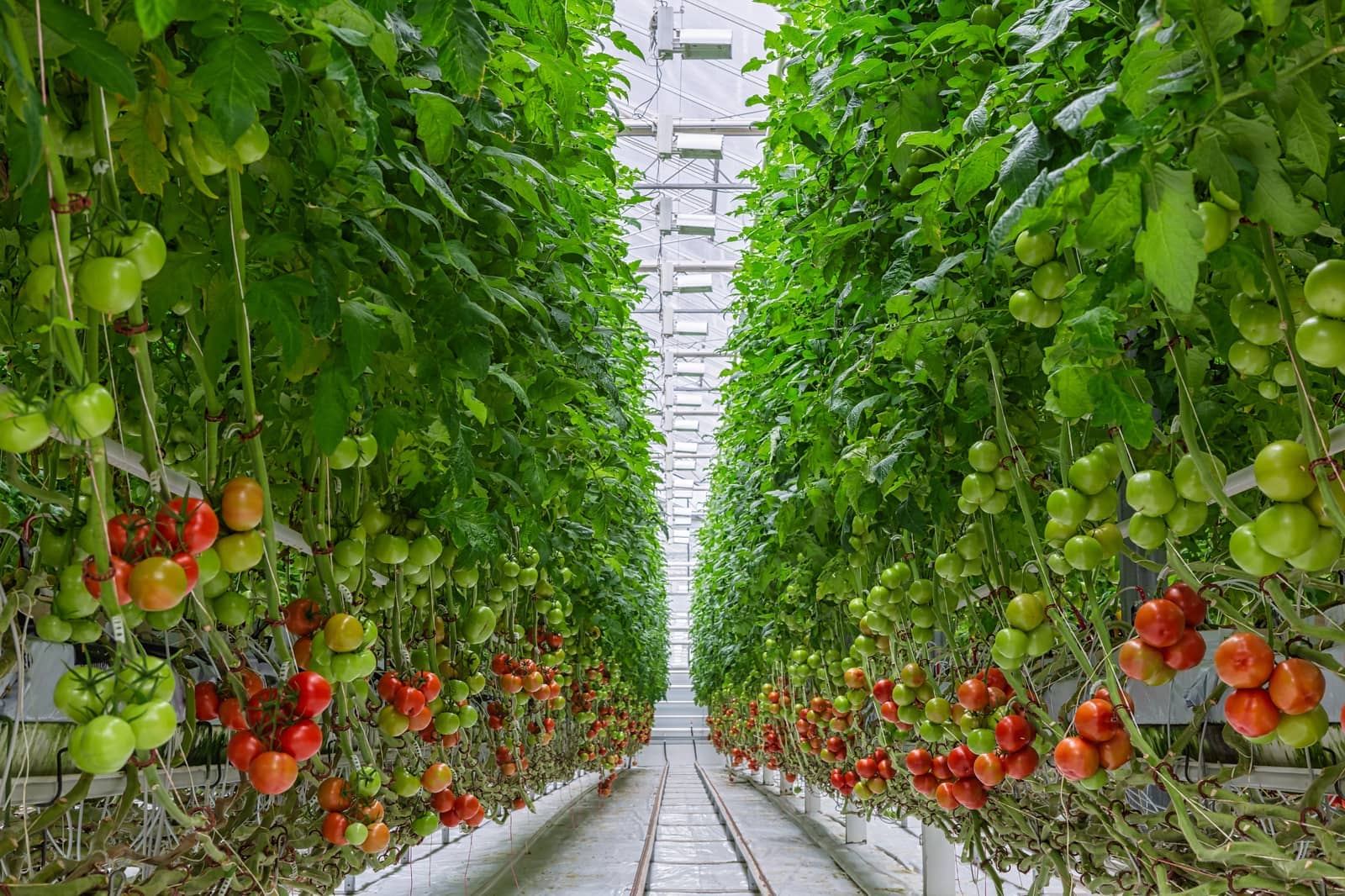
Kansas City's extreme weather patterns—from subzero winters to scorching summers—make traditional greenhouse heating and cooling expensive and inefficient. Geothermal greenhouses offer a revolutionary solution that's transforming how we grow food year-round in the Midwest.
What is a geothermal greenhouse?
A geothermal greenhouse uses the soil under its floor as a heat battery. Ours are built around a Ground-Air Heat Transfer (GAHT) system. Fans pull warm, humid air from the top of the greenhouse through perforated pipes buried beneath the floor. The soil soaks up that heat during the day, and the same pipes give it back at night. Ceres Greenhouse Solutions, which developed the GAHT® design, describes it as a closed loop: the greenhouse's own air circulates, unlike an earth tube, which pulls in outside air.
Three things set it apart from a standard backyard greenhouse:
- The soil does the storing. The Kansas Geological Survey describes soil and rock about 10 feet down as near-constant year-round, while air temperatures above swing widely. A GAHT system puts that stable mass to work and charges it with the greenhouse's own daytime heat.
- The structure is built to hold heat. Insulation around the outside of the foundation keeps stored heat under the greenhouse instead of letting it leak sideways into the yard. Many geothermal greenhouses are also partly sunk into the grade or earth-sheltered.
- It is not a heat pump. A ground-source heat pump, the system the Kansas Geological Survey describes for heating homes, circulates fluid through buried loops and runs a compressor. A GAHT system moves air with fans.
1. Dramatic Energy Cost Reduction (60-80% Savings)
In Johnson County conditions, a well-designed geothermal greenhouse can cut heating costs sharply compared with a conventionally heated greenhouse. The Ground-Air Heat Transfer (GAHT) system harnesses the earth's stable 55°F temperature, dramatically reducing heating costs in winter.
Your savings depend on the greenhouse's size, glazing, insulation and how warm you keep it on January nights, so we work through those numbers for your site before you build.
2. Extended Growing Season (365 Days)
Traditional Kansas City growing seasons run from late March to early November. Geothermal greenhouses extend this to a full 365 days, allowing you to grow fresh vegetables even during January's polar vortex conditions.
Year-round growing benefits:
- Harvest tomatoes in December
- Grow lettuce and greens all winter
- Start seedlings in February for early spring transplanting
- Maintain herb gardens year-round
3. Superior Climate Control & Plant Health
The thermal mass of underground air circulation tubes creates incredibly stable growing conditions. Temperature fluctuations are minimized, humidity stays consistent, and plants experience less stress compared to traditional greenhouses that swing between hot and cold.
4. Weather Independence & Storm Protection
Kansas weather is unpredictable. Hailstorms, ice storms, and severe temperature swings can devastate traditional gardens. Underground geothermal systems provide consistent protection, ensuring your investment in plants and time is safeguarded against extreme weather events.
5. Excellent Return on Investment
While geothermal greenhouses require higher upfront investment than traditional structures, the ROI is compelling:
Financial benefits:
- Payback Period: 3-5 years typical for residential installations
- Energy Savings: $2,000-$4,000 annually for residential systems
- Food Production Value: $3,000-$6,000 worth of vegetables annually
- Property Value Increase: 15-25% boost to home value
What Kansas City weather does a geothermal greenhouse have to handle?
A Kansas City geothermal greenhouse has to cover both ends of the thermometer. January nights near 20°F and July afternoons near 90°F are normal here, not extreme.
Measure Kansas City Normal January low 19–21°F Normal July high 87–89°F January record low −20°F (1912) July record high 112°F (1954) Average last spring frost (Johnson County) April 15 Average first fall frost (Johnson County) October 23 USDA hardiness zone (2023 map) 6b
Sources: National Weather Service Kansas City, January normals and records and July (1991–2020 normals); K-State Research and Extension Johnson County gardening calendar and hardiness zones article.
What that means for the design:
- Day-to-night swings are what GAHT handles best. Sunny winter days bank heat in the soil, and it comes back overnight.
- Long cold, cloudy stretches run the battery down. Less sun means less heat to store. Ceres notes that most commercial greenhouses still need supplemental heating, so we plan a backup heat source into every design rather than bet a crop on the soil alone.
- Summer needs its own plan. Ceres says a GAHT system is really only suited to cooling from late fall through early spring. For July we rely on vents, fans and evaporative cooling.
- Outdoor frost dates explain the old season. Johnson County averages its last frost around April 15 and its first around October 23. Inside a geothermal greenhouse, the calendar stops being the limit.
What are the trade-offs of a geothermal greenhouse?
The trade-offs are the dig, the soil and the upfront cost. None of them rule a project out, but each one shapes the design:
- More excavation. GAHT pipes sit below the greenhouse floor, and depth is set by the soil and water table (details in our GAHT soil design guide). Federal OSHA rules require a cave-in protective system for workers in any excavation 5 feet or deeper unless it is entirely in stable rock, so a deep pipe bed is not a weekend DIY dig.
- Clay, water and rock. Parts of Johnson County have a seasonal high water table within about 15 inches of the surface or bedrock within 3 feet. We check before we commit to a pipe depth.
- Radon. Indoor radon tests in Johnson County average 5.3 pCi/L, above the EPA's 4.0 pCi/L action level. Because GAHT pipes are perforated and open to the soil, Ceres advises testing soils for radon before installing a GAHT system in high-radon areas. That matters most for a greenhouse attached to your house. K-State Research and Extension in Johnson County sells radon test kits.
- Winter light. Soil heat doesn't add daylight. Fruiting crops like those December tomatoes need supplemental lighting as well as warmth. Our hydroponic greenhouse design guide covers LED lighting.
- Higher upfront cost. Excavation, insulation, pipe and fans cost more than a kit greenhouse on a gravel pad. We price each build to its site.
Sources: OSHA 29 CFR 1926.652; USDA NRCS Soil Data Access, Johnson County, KS survey (KS091); Johnson County radon (Johnson County Government, 2022); K-State Research and Extension Johnson County, radon; Ceres Greenhouse Solutions, GAHT® system FAQ; Ceres, adding a GAHT to an existing greenhouse.
How do we plan a geothermal greenhouse for a Kansas City property?
We plan the site before the structure. This is the order we work in for geothermal greenhouse construction across the Kansas City metro:
- Sun first. GAHT works best where the greenhouse gets winter sun, so we site for an unshaded southern exposure.
- Soil and water check. We pull the NRCS soil survey for your parcel, then confirm with a test pit before setting pipe depth. A high water table or shallow rock changes the plan.
- Footings to frost depth. The Johnson County Building Officials' residential foundation guideline sets a 36-inch minimum frost footing depth. It allows 12-inch footings for freestanding accessory structures of 600 square feet or less with an eave height of 10 feet or less. Your city's permit office has the final word.
- Insulate the perimeter. When the GAHT system sits under the greenhouse, Ceres recommends insulating the outside of the foundation so stored heat stays in the soil pocket.
- Size fans, controls and backup heat. Our GAHT system installation page walks through the design and commissioning steps.
- Test for radon if the soil gas could reach living space.
For a fully below-grade build, see geothermal subterranean greenhouse construction. Building on acreage near the Johnson/Miami County line? See our Gardner geothermal greenhouse page.
Source: Johnson County Building Officials Association, Residential Foundation Guideline (via City of De Soto); Ceres Greenhouse Solutions, adding a GAHT to an existing greenhouse.
Frequently asked questions
Does a geothermal greenhouse still need a heater in Kansas City?
Plan on a backup. A GAHT system returns heat the soil stored on sunny days, so a long run of cold, cloudy weather can draw it down. Ceres says most commercial greenhouses need supplemental heating. We design one in so a cold week doesn't cost you a crop.
Is a geothermal greenhouse the same as a geothermal heat pump?
No. A ground-source heat pump circulates fluid through buried loops and uses a compressor. A GAHT greenhouse uses fans to move the greenhouse's own air through perforated pipes in the soil beneath it.
Can I really grow year-round in a geothermal greenhouse?
Yes. Lettuce, greens and herbs are the easiest winter crops. Warm-season crops like tomatoes can produce in December too, but they need more heat and supplemental light than greens.
Should I test for radon before building one?
Yes. Indoor radon tests in Johnson County average 5.3 pCi/L, above the EPA's 4.0 pCi/L action level, and GAHT pipes are open to the soil. Ceres recommends testing soils before installing a GAHT system where radon is high. K-State Research and Extension in Johnson County sells test kits.